A failed LPBF build is rarely just a failed part.
Failed LPBF builds can affect much more than the component itself. When something goes wrong during a metal additive manufacturing job, the obvious loss is the component. But in real production, that is often only the beginning.
A failed build can also mean lost machine time, wasted powder, operator hours, additional post-processing, another setup and, perhaps most importantly, a delay in the production schedule.
This is why build reliability matters far beyond part quality. It directly affects the economics of metal additive manufacturing.
A failed build costs more than material
Metal powder is valuable, especially when working with titanium, nickel alloys, cobalt-chrome or other high-performance materials. But focusing only on the amount of powder lost gives an incomplete picture.
A build may run for many hours before a problem becomes visible. During that time, the machine is occupied, inert gas is consumed, the operator has already prepared the job and the build plate, and downstream production may already be planned around the expected result.
If the build has to be repeated, much of that work starts again.
The real cost can therefore include:
- machine time that produced no usable output;
- operator preparation and handling;
- powder loss or additional powder processing;
- build plate preparation;
- inert gas and energy consumption;
- inspection and post-processing of an unusable part;
- lost production capacity;
- delays for the next scheduled job.
For a prototype, this may be frustrating. In small-batch or serial production, repeated failures can quickly become a serious productivity problem.
Why Failed LPBF Builds Happen
Failed LPBF builds rarely have a single cause.
Laser powder bed fusion is a controlled manufacturing process, but it is also a process in which many variables interact. Powder spreading, part geometry, support strategy, processing parameters, atmosphere, temperature and machine condition can all influence the result.
The National Institute of Standards and Technology (NIST) identifies inconsistent part quality and production efficiency as persistent challenges in metal additive manufacturing. NIST is actively researching monitoring and control methods that can improve both quality and productivity in LPBF.
The important point is not that every irregularity automatically causes a failed part. It is that the earlier an abnormal process condition becomes visible, the more options an operator has.
Seeing the process changes the decision
Without meaningful process visibility, an operator may only discover a problem after the job has finished.
That can mean allowing a machine to continue printing for hours even though the final component may already be compromised.
In-process monitoring changes that situation. ASTM E3353, the Standard Guide for In-Process Monitoring Using Optical and Thermal Methods for Laser Powder Bed Fusion, describes monitoring as a tool for observing process stability and identifying process signatures that may correlate with flaws or disturbances.
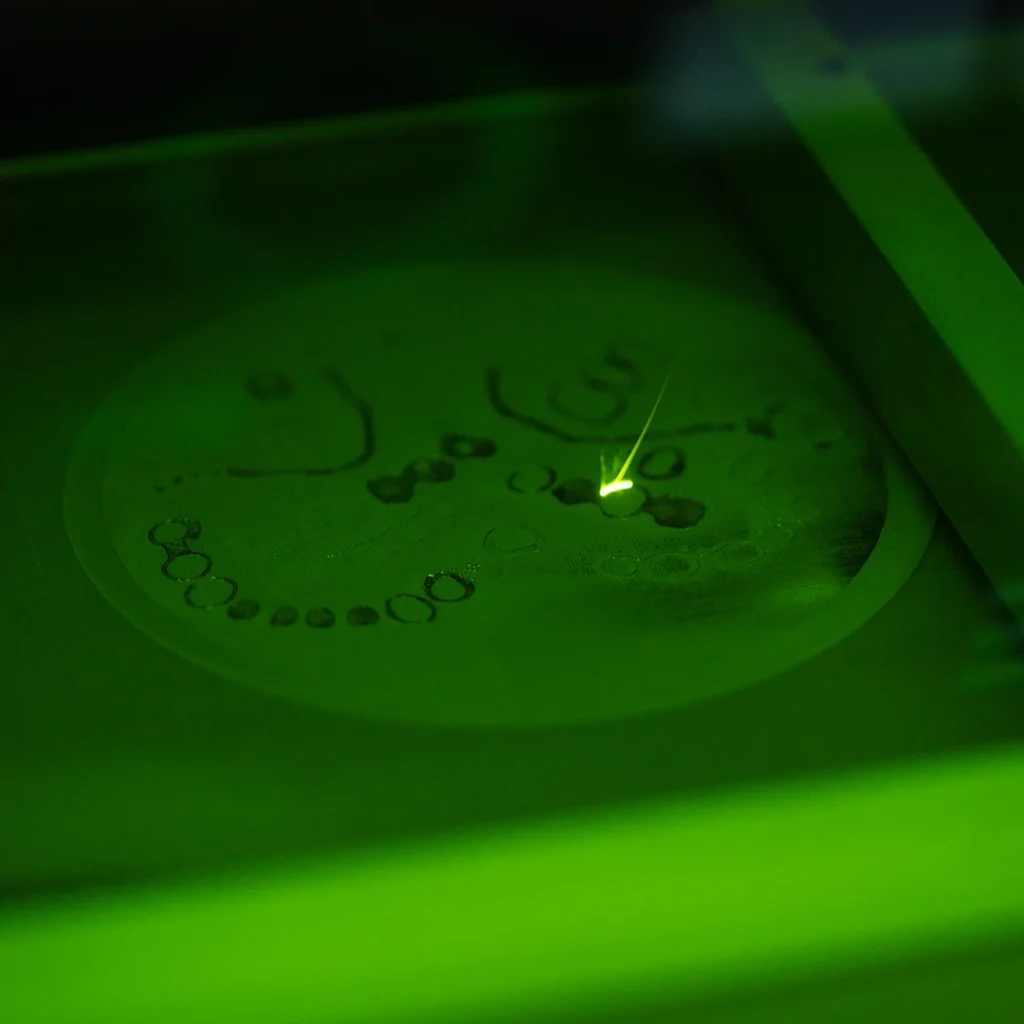
Monitoring is not a guarantee of a perfect part, and it does not replace good process development.
What it provides is information.
And information allows better decisions.
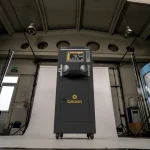
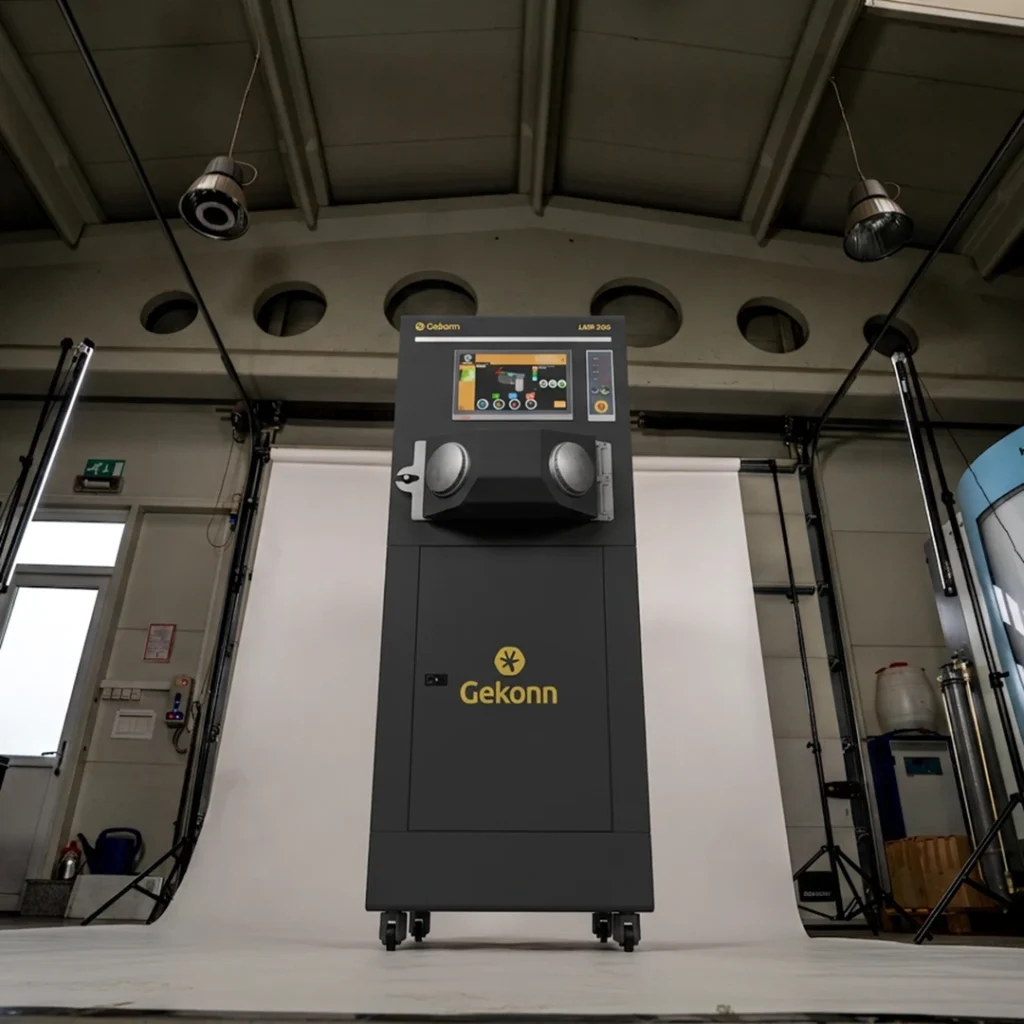
At Gekonn, this idea is built into the way our LPBF metal 3D printing systems are designed. The focus is on controlled, repeatable and scalable production rather than simply completing a print.
Systems such as the Gekonn LMP200 are designed for companies moving from advanced prototyping into stable small-batch production. The platform combines process control with access to important parameters such as laser power, scanning speed and layer thickness.
The goal is simple: give operators and engineers enough visibility and control to react before a small process issue develops into a more expensive production problem.
Control also starts before the laser turns on
Preventing failed builds is not only about what happens during printing.
A stable process begins with correct machine installation, calibration, operator training, powder handling and regular maintenance. This is why the production system around the machine matters just as much as the machine itself.
For companies moving from development work into repeatable production, these elements become increasingly important.
One successful print proves that a part can be made.
A reliable workflow proves that it can be made again.
The better question is not “Did the print finish?”
A completed build is not automatically an efficient build.
The more useful questions are: Was the process stable? Was the operator able to understand what happened during production? Can the same result be repeated? And if something starts to go wrong, how quickly can the team react?
Metal additive manufacturing becomes commercially valuable when good parts are produced consistently, not occasionally.
Reducing the cost of failed LPBF builds is therefore not about chasing a theoretical zero-failure process. It is about creating a production environment where problems can be detected earlier, decisions can be made faster and unnecessary machine time can be avoided.
That is what process control is ultimately about.